
Switzerland-EU: when bureaucracy becomes a systemic risk

There's nothing new in Brussels - apart from the acceleration. On 3 February 2026, the German daily Die Welt revealed a study by the industry organisation Gesamtmetall: in 2025, the European Commission had introduced 1,456 legislative acts, the most since 2010. Twenty-one directives, 102 regulations, 137 delegated acts and 1,196 implementing acts. Four new texts [...]
Switzerland-EU: importing European bureaucracy to «stabilise» for a few months?
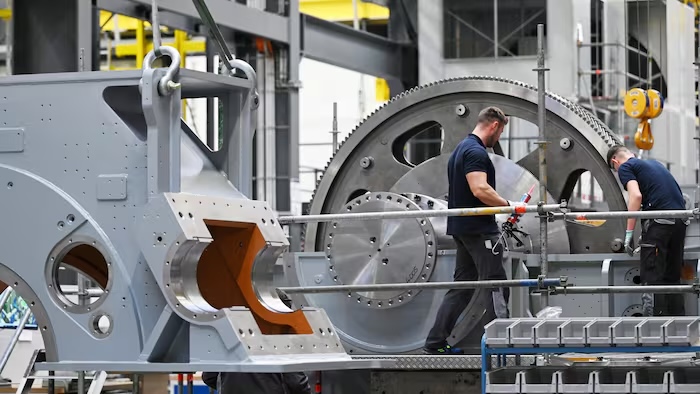
What the German press has revealed should be a wake-up call for Switzerland. While Brussels was promising to reduce bureaucracy, the production of standards reached an all-time high. If even German industry is denouncing a technocratic drift and growing legal uncertainty, why would Berne consider anchoring our law more firmly in this mechanism? Before any irreversible decisions are taken, it [...]
Switzerland-EU: not worth the risk
For months, the debate has been presented as an economic no-brainer: without the new agreements with the EU, Switzerland would be taking a major risk to its prosperity. But what do the figures and independent analyses really say? When two leading Swiss economists come to opposing conclusions, one thing becomes clear [...].
Switzerland-EU: the Swiss participatory model on borrowed time?
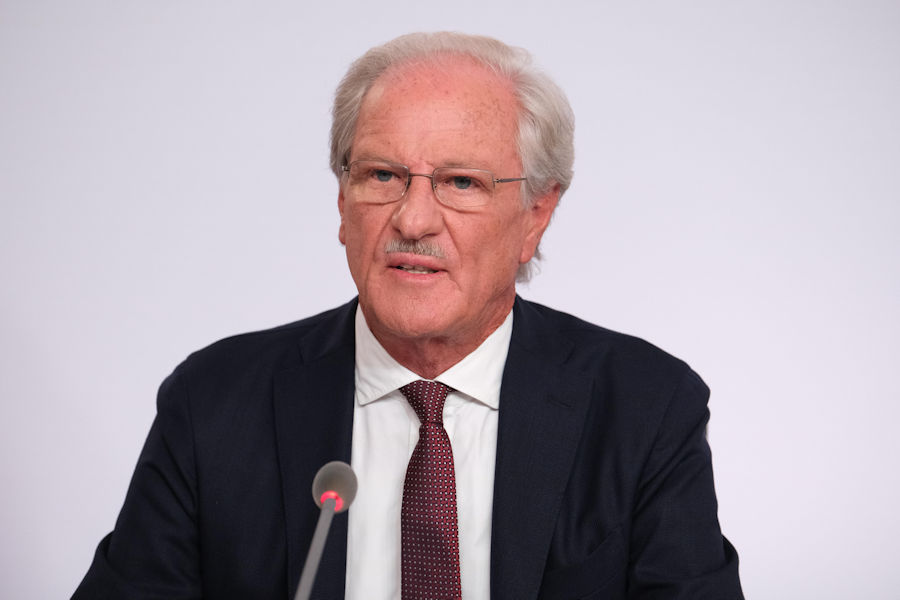
As the debate on the Swiss-EU integration agreements intensifies, a voice from Europe's highest industrial level is disturbing the prevailing consensus. In an interview with Die Weltwoche (15 February 2026), Wolfgang Reitzle - an experienced executive with a thorough knowledge of the economic and legal structures of the European Union - warns against a [...].
EU-Switzerland framework agreement: economic capitulation disguised as pragmatism
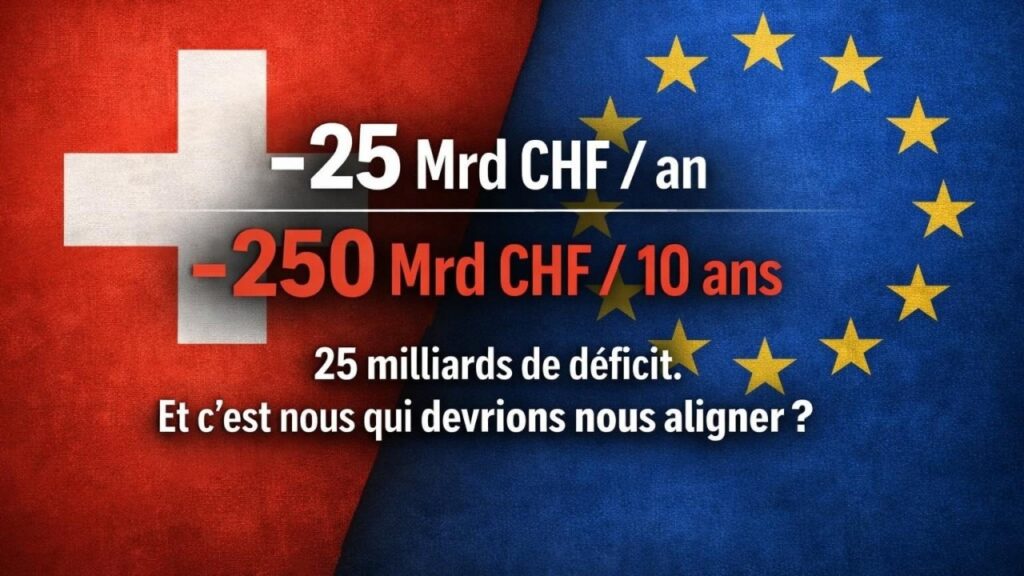
We are being asked to give up our legal sovereignty for... non-existent economic gain. Under the reassuring label of ’bilateral agreements«, the EU is proposing that Switzerland unilaterally align itself with its standards, even though we have an annual trade deficit of 25 billion with Brussels. In other words: we are customers - yet we are being asked to [...]
The transfer of trades has been banned. Craftsmen and professionals have been isolated

People talk about performance, adaptation and modernity. Yet, on the ground, something has gone deeply wrong at work. This malaise is not individual. It's structural. And it deserves to be addressed. We talk a lot about performance, growth and adaptation. And yet, on the ground, one observation is repeated everywhere - among craftsmen, [...]
When Switzerland starts copying those in decline
Switzerland has never been rich by chance. It became rich because it was able to preserve a rare balance between openness and control, flexibility and security. Today, under the guise of «wage protection», it is this very foundation that is being undermined. Behind a technical measure on redundancies lies a much more profound transformation [...].
The real Swiss luxury is not GDP: it's confidence

There are rich countries. And there are strong countries. Switzerland is one of those rare nations that have understood that true power is not measured in billions, but in the confidence it inspires - in its citizens, its businesses and its partners. This confidence, built on stability [...]
Microsoft in Switzerland: when abuse of position becomes a business model

When a private giant imposes its rules on the Swiss economy, it's no longer a simple technological debate - it's a problem of sovereignty. By driving up the price of its licences without any tangible improvement in services, while locking businesses and public authorities into a model of perpetual dependence, Microsoft is revealing a drift that has become impossible to [...].
Bilaterals III: when the Fribourg employers fabricate fear to gag the people
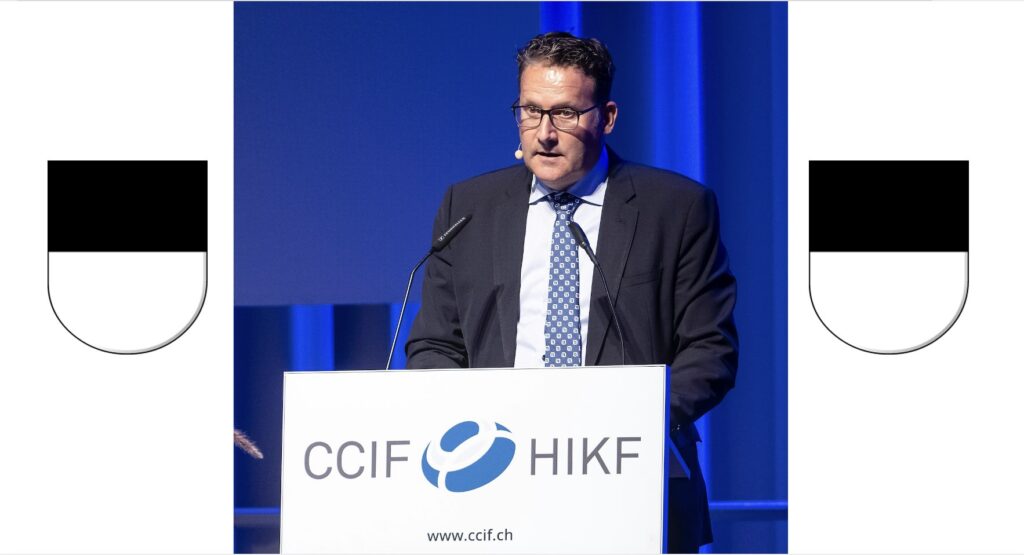
When a chamber of employers publicly calls for a political party to be «fought», when a subsidised media relays a carefully calibrated alarmist discourse without distance, and when any dissenting voice is disqualified even before the debate, this is no longer an economic discussion - it's a political conditioning operation. Under the guise of defending prosperity, [...]