
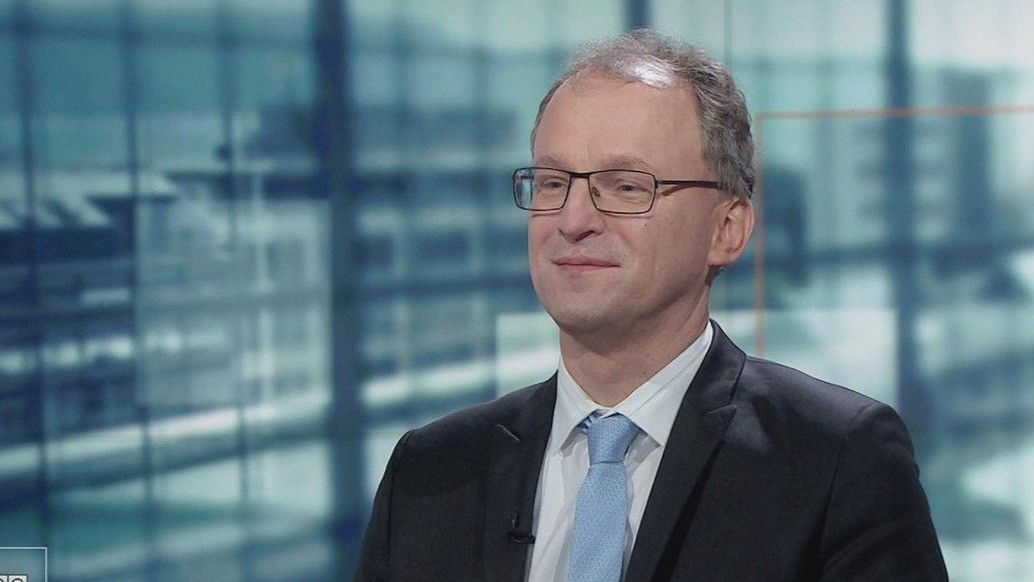
RIGHT OF REPLY: REALITY VERSUS THE FIGURE
Following our editorial denouncing the statistical shipwreck of extensive growth, (at Reread hereThe ex-SNB economist Cédric Tille wished to reply. According to him, the slowdown in GDP per capita would have «nothing to do with immigration,» inequality would be stable after redistribution, and the explosion of mortgage debt would be merely a necessary corollary to avoid a «credit crunch.» In short, the rigour of his models invalidates our field observations.
Here is the answer from Swiss Sovereignty. Because the economy isn't handled in a laboratory, but in the real lives of citizens.
Cédric Tille replies with a technician's confidence: «Statistically, I'm doing well.» Very good. But what's the point of being afloat in your models when the country itself is starting to become saturated?
The fundamental flaw in your reasoning, Mr Tille, is methodological: you confuse the absence of proof in an incomplete model with proof of absence in reality. Your analysis reduces a complex systemic phenomenon to a few econometric correlations divorced from their structural mechanisms. However, population is not a neutral variable in an economy like Switzerland's.
1. Population growth produces real systemic effects
When a country adds the equivalent of a large city to its population each year, the effects do not disappear because they are difficult to model in a linear regression. High population growth directly affects housing demand, mortgage expansion, asset prices, infrastructure, transport, and the overall cost of living. It is precisely these transmission channels that your reasoning completely dismisses.
2. Global GDP is increasing, but real living standards are deteriorating
This is where your reading becomes problematic. You reason through macroeconomic aggregates: GDP per capita, GDP per hour worked, statistical coefficients. But citizens live a concrete reality: soaring rents, collapsing home ownership, overcrowded trains, strained infrastructure, and ever-increasing essential expenses. An economy can show aggregate growth while producing a degradation of the material and asset comfort of its middle class.
3. The real subject is no longer income: it's wealth
You state that inequalities remain stable after redistribution. But the heart of the modern economic shift is no longer solely based on wages: it is wealth-based. In an economy fuelled by mortgage credit, asset owners benefit from price inflation, while households dependent solely on their wages see their access to wealth closing off. This is precisely what many young Swiss people are experiencing today. The fracture is there: access to real assets is becoming a privilege.
4. Extensive growth eventually weakens productivity
You are asking where the link lies between free movement and a productive slowdown. The question is well-known: does an economy with an abundant labour supply retain the same incentives to automate and increase efficiency? Continuous access to imported labour favours extensive growth: more workers, more volume, but relatively fewer structural productivity gains. Quantity ends up replacing quality.
5. The question of gold: denial of the tangible underlying asset
Your remark about the «fascination for gold» reveals a profound misunderstanding. Gold is not a fetish; it is a witness to an economy rooted in reality. As the Swiss banker recalled Ferdinand Lips In his warnings to parliamentarians, the sale of our physical reserves marked the shift towards an increasingly financialised economy based on credit expansion. It is precisely this technocratic paradigm that now claims a nominal GDP increase is sufficient to demonstrate an improvement in living standards. By discarding gold, you discard the notion of intrinsic value to rely solely on dematerialised flows and asset inflation, which gradually moves citizens away from access to real wealth.
6. Reality always catches up with models
The problem with many technocratic arguments is that they measure monetary flows without measuring quality of life, congestion, territorial pressure, or the erosion of collective capital per capita. Yet this is precisely what the public is feeling today. The debate isn't about whether GDP exists, but who truly benefits from this growth and at what collective cost it must be obtained.
CONCLUSION: FOR AN ECONOMY OF REALITY VERSUS THE ILLUSION OF THE FIGURE
Mr Tille, your «rigour» is a capitulation to the complexity of the real world. By confining yourself to a purely accounting-based reading, you are ignoring that the economy is above all a system of physical limits and social structures.
The unchecked population growth, supported by the credit tap of commercial banks and the complacency of the Swiss National Bank, is a vector of real impoverishment. It destroys the middle class, artificially inflates global GDP, while reducing the slice of the pie for each citizen.
The greatness of a nation is not measured by the volume of its economic aggregates, but by the real prosperity, stability, and concrete freedom of its citizens. It is time to move away from quantitative illusion and rediscover the path of a qualitative economy. Switzerland will not be built on demographic overcrowding justified by Excel spreadsheets, but on the historical discipline that has made it strong.
Did this analysis resonate with you? Like and repost to help us reach a wider audience.
What the media keeps silent about, we analyse. What Bern negotiates, we dissect. https://test.souverainete-suisse.ch/
Together, we are the Guardians of Independence. Join the Swiss Sovereignty Movement. Not tomorrow. Not later – Now.